Seven Churches of Revelation
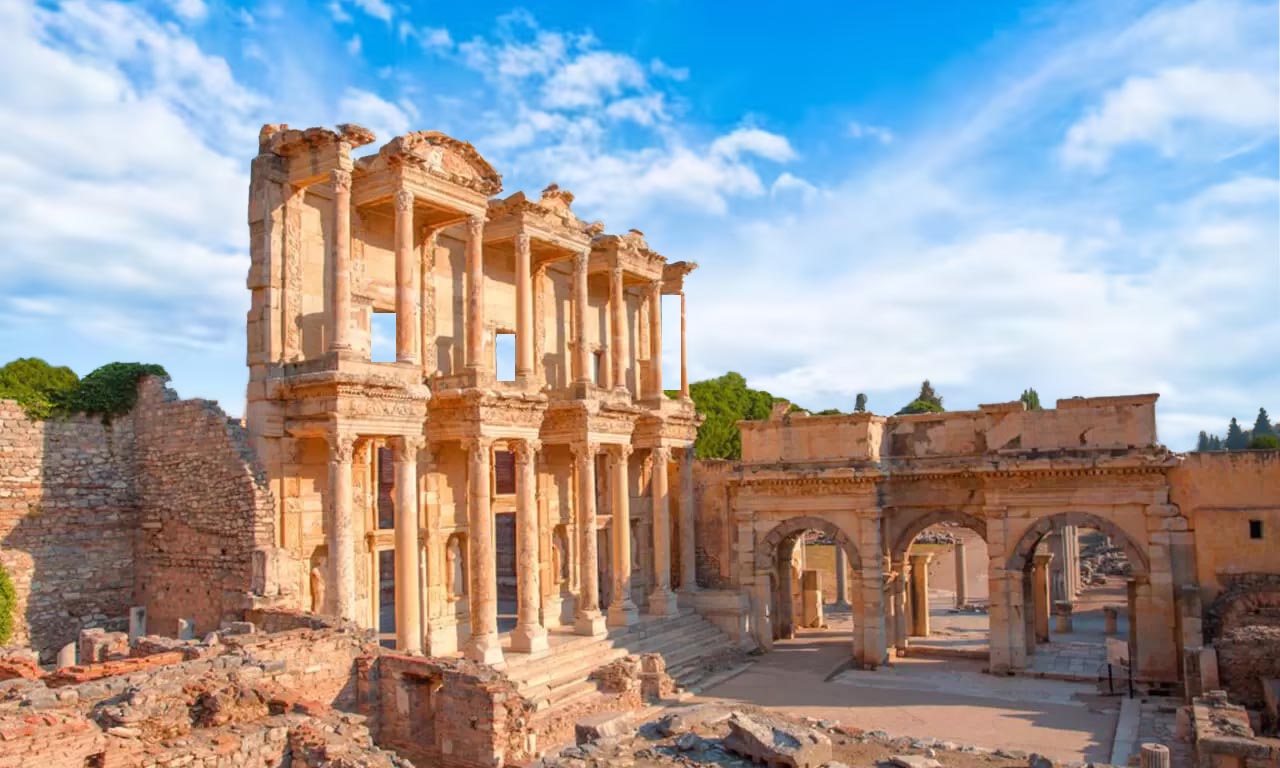
Ephesus is the most impressive, where we will visit the very theater where St Paul addressed the Ephesians, and stroll the streets on which he walked. During the Byzantine Empire, Constantinople was a city of churches, prime among which was the splendid cathedral of Hagia Sophia. The great church, now a museum, is still one of the city’s prime attractions, but there are many other Byzantine churches to visit, including the very Byzantine Church of St George at the Ecumenical Patriarchate.
ISTANBUL- PERGAMON- IZMIR – SARDIS – PHILADELPHIA – PAMUKKALA – HIERAPOLIS LAODICEA – COLOSSAE –KUSADASI – EPHESUS – ISTANBUL
Included/Excluded
- Return Flights from JNB
- Guide
- Hotel Accommodation as on Program
- Bus Transfers as on program
- Breakfast and Dinner
Tour Plan
Seven Churches of Revelation
ISTANBUL- PERGAMON- IZMIR - SARDIS – PHILADELPHIA – PAMUKKALA - HIERAPOLIS LAODICEA – COLOSSAE –KUSADASI – EPHESUS - ISTANBUL
Day 01:
Our journey begins as we depart on overnight flight.
Meals: Breakfast and Dinner
Day 02:
Arrival - Free time – Turkey
Meals: Dinner. Overnight: Turkey
Day 03:
Istanbul, Pergamon, Izmir
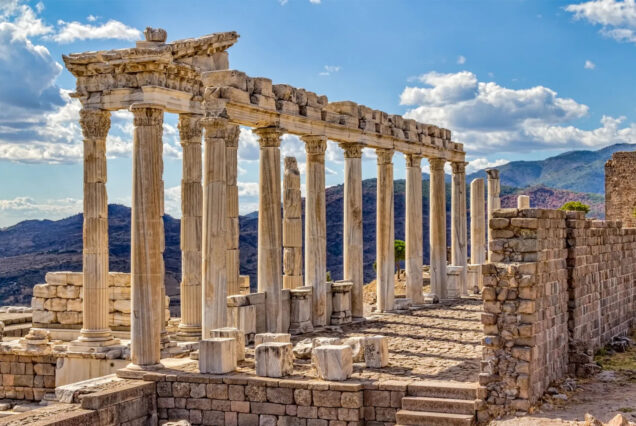
We make our way to Pergamon. The church of Pergamum was praised for its forbearance; (Revelation. 2:12-17) it was here that the first Christians were executed by Rome. We'll visit the fabled Acropolis, pass through the Royal Gates, view the foundations of the Altar of Zeus and visit the ruins of the library (which once held 200,000 volumes). We travel east to Thyatira viewing the ancient roadway and period columns. Thyatira was once a busy trading center and famous as a "seller of purple," the most favored of the Seven Churches. We continue south to Izmir, which is the third largest city in Turkey and a long time center for Jews and Christians. In Paul's day, Izmir was known as Smyrna and was another of the Seven Churches (Rev. 2:8-11). We end our day in Izmir.
Meals: Dinner. Overnight: Izmir
Day 4:
Sardis, Philadelphia, Pamukkale
Departing our Hotel in Izmir, we'll see Polycarp's Church and visit the ancient roman agora. Then, we travel to Sardis, which was berated by John for its facade of strength when, in reality, it was weak (Rev. 3:1-6). Here coins were minted and the dyeing of wool originated. We'll visit the gymnasium and synagogue. Our next stop is nearby Philadelphia from where we are challenged to “hold fast” and look forward to the coming of the "new Jerusalem" (Rev. 3:7-13) in the Book of Revelation. Not much is left of the city except for the ancient wall and the remains of a Byzantine basilica in the modern city of Alasehir.
Meals: Breakfast and Dinner. Overnight: Pamukkale
Day 5:
Hierapolis, Laodicea & Colossae
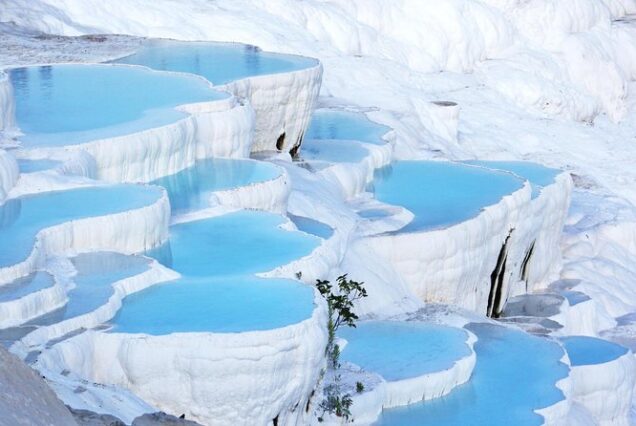
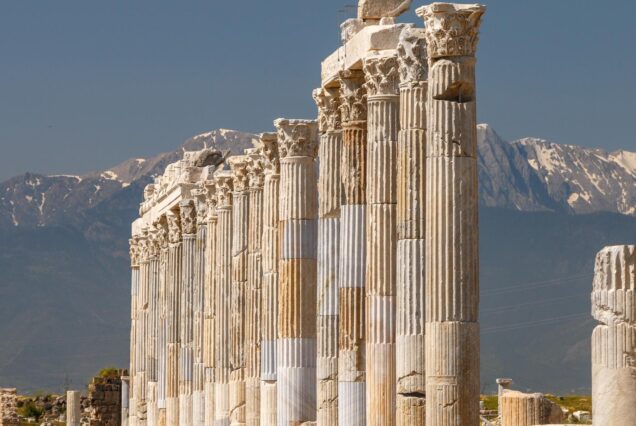
Hierapolis, meaning "Sacred City," was an ancient center for pagan cults until it was transformed into a Christian center in the first century. According to tradition, the Apostle Philip lived and was martyred in Hierapolis. It was likely the hot springs of Hierapolis (in contrast to the cold mountain springs near Colossae) that combined to bring application to the "lukewarm" Laodiceans (Rev 3:14-22). This connection between the cities lies behind Paul’s reference to Hierapolis and Laodicea in his epistle to the Colossians (Col 4:13). Laodicea contains many acres of ruins to visit including a stadium and remnants of a sophisticated water system. Nearby Colossae is well-known throughout Christian circles as the receiver of Paul's letter to the Colossians. Today, the town has fallen into obscurity and nothing remains. We spend the remainder of the day traveling through the Turkish countryside arriving in the port city of Kusadasi, meaning “Bird's Island” refering to the shape of Pigeon Island. The early settlements in Kusadasi is by the Lelegians and Carians who moved from the central Anatolia around the year of 3000BC. The city was invaded by Persians around the year of 546BC. In 200BC Kusadasi and its environs were dominated by the Roman Empire, and with the division of the Roman Empire, became a state of Byzantine. The Turkish domination entered upon the invasion of Seljukian Kilic Arslan the 2nd. It was important trade roads such as Silk Road -once held by EphesusThe day will not be complete without a visit to a local Turkish Rug cooperative.
Meals: Breakfast and Dinner. Overnight: Kusadasi
Day 6:
Kusadasi – Ephesus – Istanbul
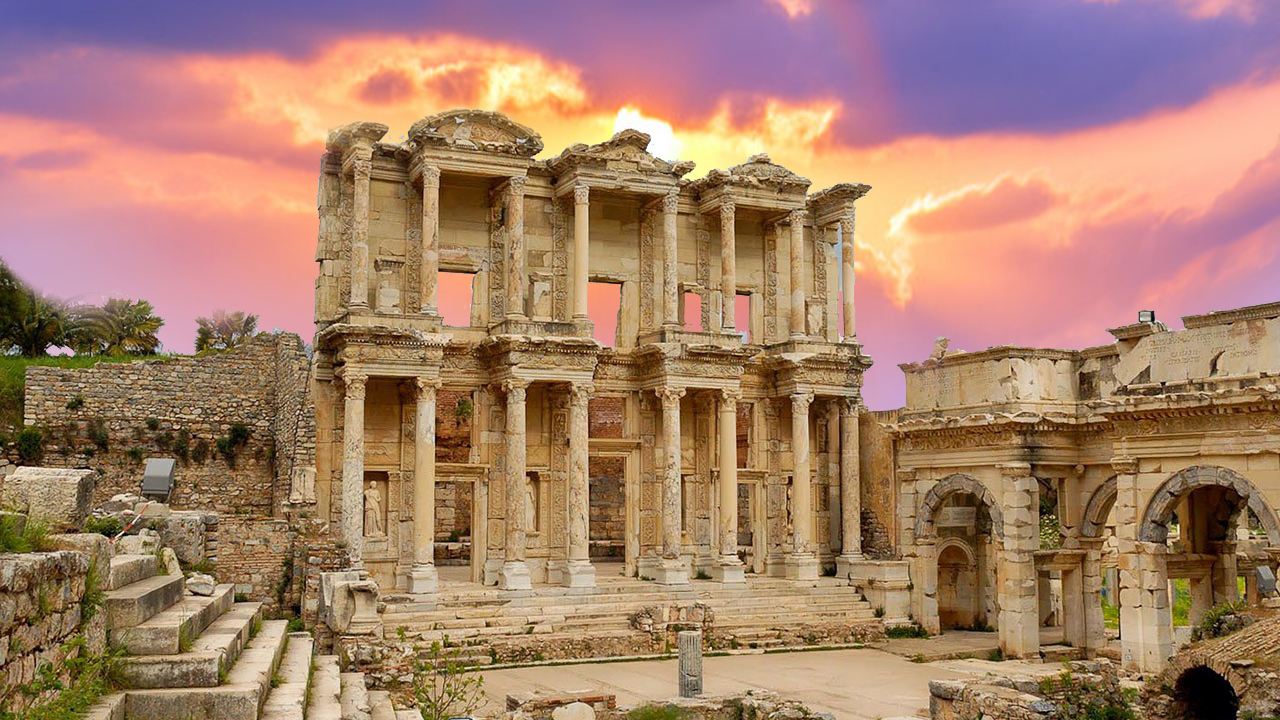
We travel to the nearby town of Selcuk for a visit of ancient Ephesus. Ephesus is mentioned multiple times in the New Testament, and the biblical book of Ephesians, written around 60 A.D Ephesus was once a thriving port town of 250,000 people. Today you can still see the spectacular excavations of the major streets in this ancient city. We view the Library, Agora, theatre, colorful mosaics in the aristocratic Terrace Houses, and a panoramic outlook of the surrounding ancient port area (including a wealth of church history and cultural insight). Then we continue with a visit to the Basilica Church of John, which houses an immersion baptismal and is believed to be resting place of John. From here we have an excellent overview of the Ephesus harbour and see the site of the Temple of Artemis, which is listed as one of the Seven Wonders of the Ancient World.
Meals: Breakfast and Dinner.
Day 7: Istanbul
Today we have to check-in 3 hours before the time for our flight back home.
Day 8: Home
We have a early morning as we make our way to the Airport.
You May Like